

2025 Ford Explorer® in Dickson, TN
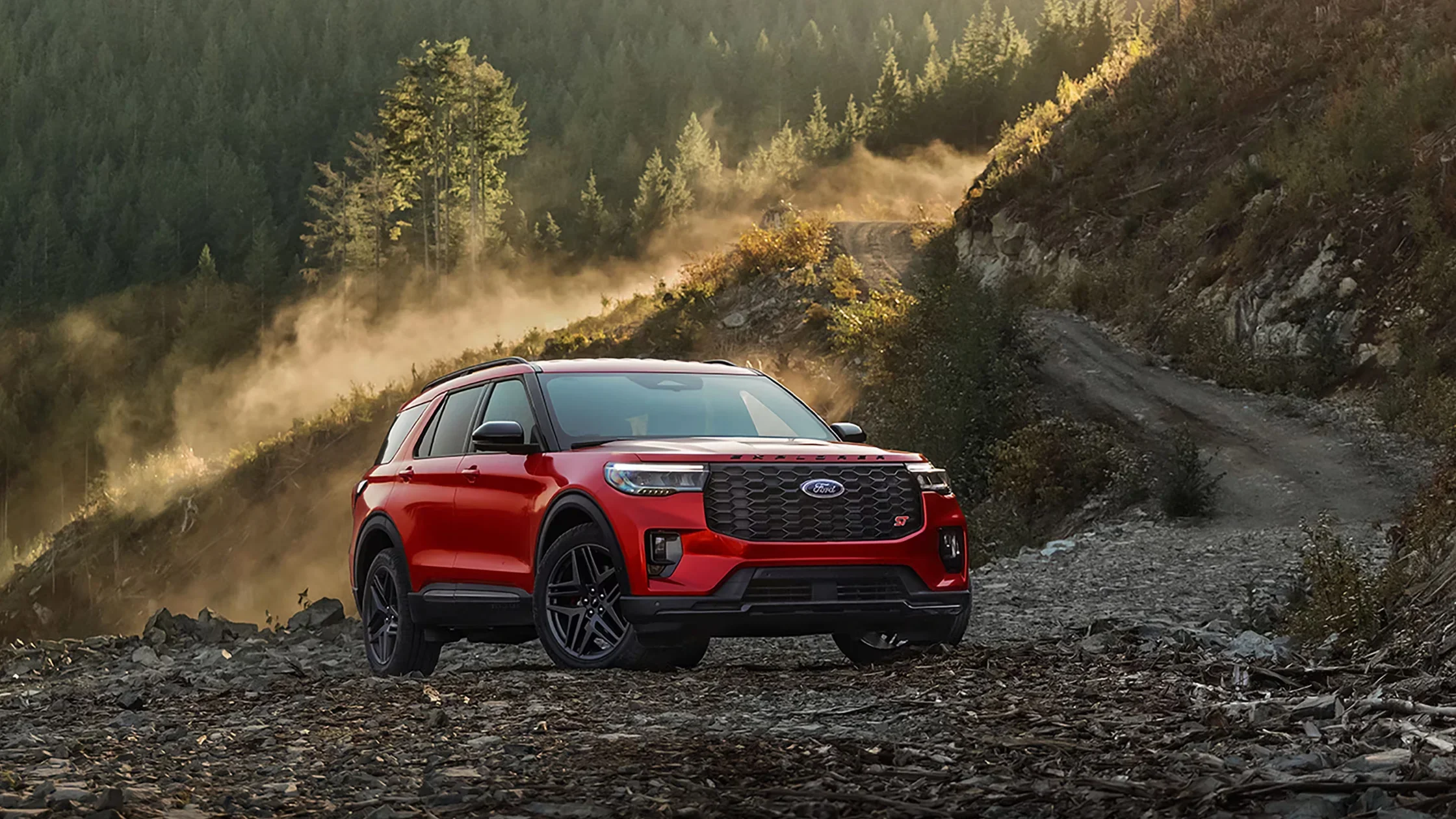
The 2025 Ford Explorer® is a sport utility vehicle built on a unibody construction that integrates multiple trim levels including Active, ST-Line, ST, and Platinum. Each trim offers a tailored combination of drivetrain configurations, engine choices, and interior dimensions. Manufactured at the Chicago Assembly Plant, this model provides options that balance power, technology, and utility while addressing diverse driving requirements. The 2025 Ford Explorer® maintains a consistent body size but offers distinct performance and technical features across trims, supporting different needs for traction, towing, and passenger capacity.
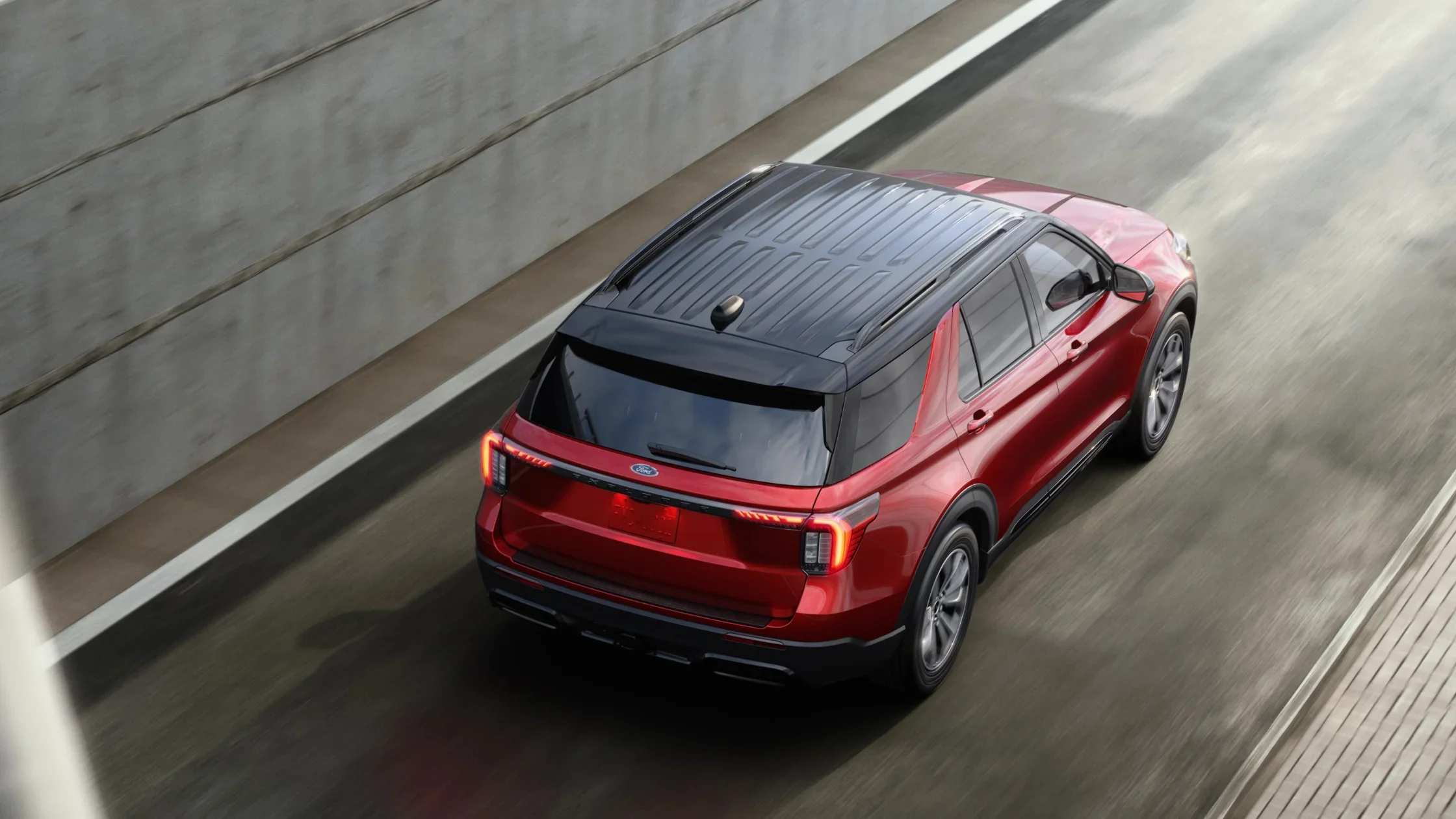
Powertrain and Drivetrain Configurations
The 2025 Ford Explorer® offers two primary engine options. The first is a 2.3-liter EcoBoost® inline-4 engine featuring an aluminum block and head. This engine produces 300 horsepower and 310 pound-feet of torque, delivering balanced performance with fuel efficiency optimized through twin independent variable camshaft timing. It uses a combination of port fuel and direct injection. This engine is standard on the Active, ST-Line, and Platinum trims and is paired with a 10-speed automatic transmission.
The second engine option is a 3.0-liter EcoBoost® V6 with a compacted graphite iron block and aluminum heads. This engine generates 400 horsepower and 415 pound-feet of torque. It employs a direct injection fuel system and also uses twin independent variable camshaft timing for precise valve control. It pairs with a 10-speed automatic transmission that includes SelectShift capability and paddle shifters, giving the driver enhanced control over gear selection. This V6 engine is standard on the ST trim and available as an option on other trims.
All trims come with rear-wheel drive as standard. Intelligent Four-Wheel Drive is offered as an option across all trims, providing enhanced traction and stability in varying road conditions. The availability of intelligent four-wheel drive supports better control during inclement weather or off-road driving.
Dimensions and Structural Specifications
The overall footprint of the 2025 Ford Explorer® remains uniform across all trims. It measures 198.7 inches in length and 78.9 inches in width, excluding mirrors. The wheelbase is 119.1 inches for all variants. The vehicle height ranges slightly from 69.6 inches on Active and ST-Line trims to 70.2 inches on Platinum. Width including mirrors is 89.3 inches, with the mirrors folding to 82.7 inches.
Ground clearance varies between trims, with the Active and ST-Line models offering 7.6 inches and the Platinum trim providing 8.2 inches. Approach and departure angles range from 19.7 degrees to 20.5 degrees for approach and 20.6 degrees to 21.5 degrees for departure depending on the trim. The ramp breakover angle extends from 16.5 to 17.6 degrees.
Wheels come in several sizes and finishes. The Active trim is fitted with 18-inch sparkle silver-painted aluminum wheels as standard, with optional 20-inch carbonized gray or luster nickel-painted aluminum wheels. The ST-Line offers 20-inch ebony machined-painted aluminum wheels, while the ST and Platinum trims include 21-inch wheels finished in magnetite or dark alloy polished aluminum. Tires correspond to wheel size with all-season black sidewall options designed for performance and durability.
Interior Space and Practical Dimensions
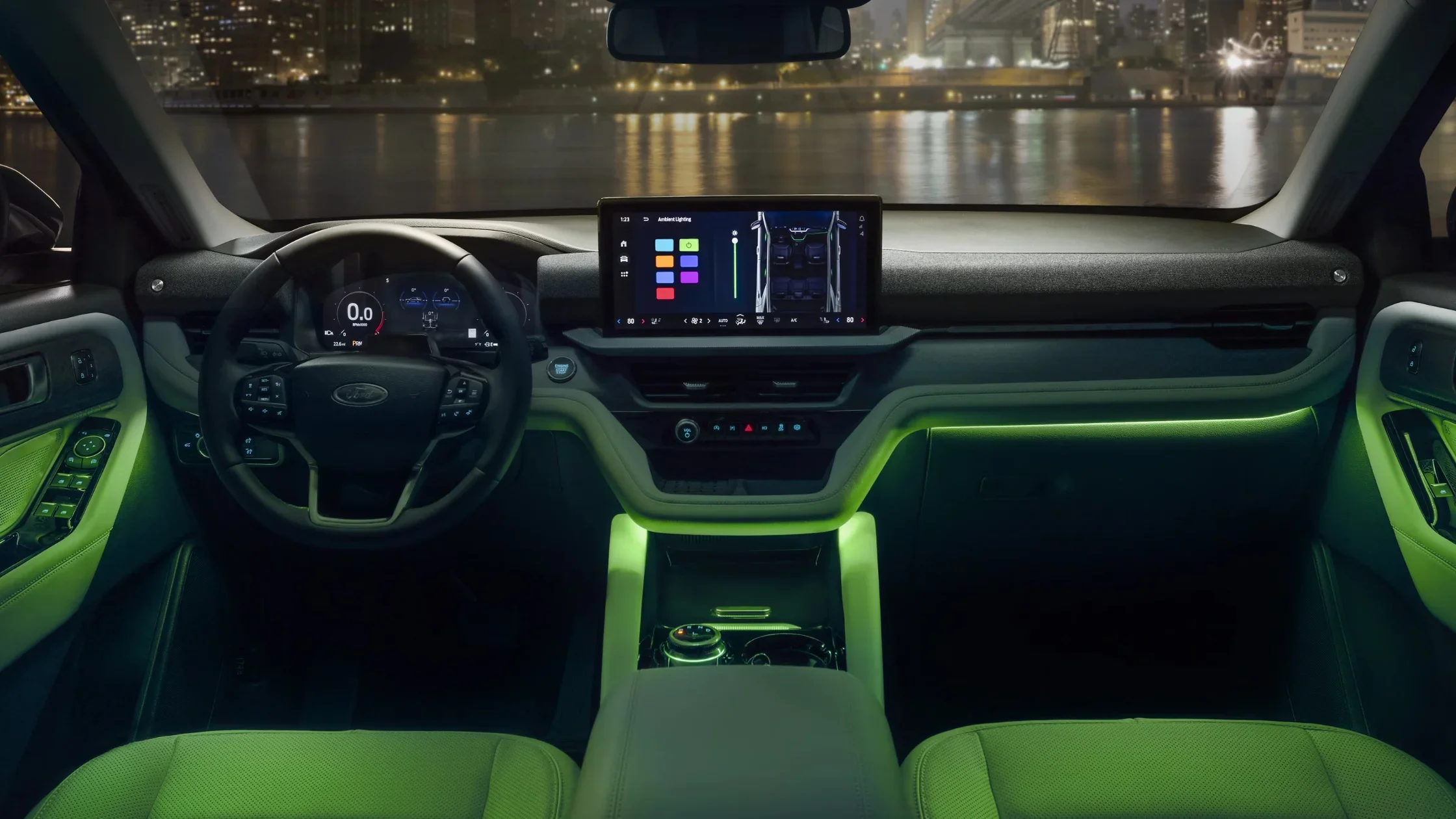
The interior is designed to accommodate six or seven passengers depending on trim and configuration. The total passenger volume ranges from 146.0 cubic feet on the Platinum to 152.9 cubic feet on the Active and ST-Line trims. First-row occupants benefit from up to 40.7 inches of headroom and 43 inches of legroom, ensuring space for driver and front passenger. Shoulder and hip room in the front row measure consistently at 62.1 inches and 59.2 inches respectively.
The second row offers up to 40.5 inches of headroom and 39 inches of legroom. Shoulder and hip room are approximately 61.9 inches and 59.1 inches. The third row provides 38.9 inches of headroom and 32.2 inches of legroom. Shoulder and hip dimensions in the third row are 54.6 inches and 40.9 inches.
Cargo volume behind the first row reaches a maximum of 85.8 cubic feet across most trims, and 46.0 cubic feet behind the second row. Cargo behind the third row measures 16.3 cubic feet, offering space for smaller items or luggage. Interior cargo volume ranges between 142.5 and 145.8 cubic feet depending on trim. Lift-in height is between 31.1 and 31.7 inches, and cargo height stands at 32.8 inches across trims. The rear opening height measures 31.5 inches, with maximum cargo height at 33.7 inches.
Technical Details of Engine Construction and Performance
The 2.3-liter EcoBoost® engine uses an aluminum block and head, with a composite shell intake manifold integrated with Exhaust Gas Recirculation (EGR). The exhaust manifold is a three-port design integrated into the aluminum head. The valvetrain uses a double overhead camshaft (DOHC) configuration with roller finger followers and four valves per cylinder. Valve diameter and lift measure 34 mm intake and 28.9 mm exhaust, both with 9 mm lift. The pistons are made of cast aluminum, and the connecting rods use forged powdered metal. Ignition is coil-on-plug with a distributor-less system.
The 3.0-liter EcoBoost® V6 features a compacted graphite iron block with aluminum heads. Its intake manifold is a composite shell welded with a runner pack. The exhaust manifold is integrated into the aluminum head. Valvetrain specifications include DOHC with roller finger followers and four valves per cylinder. Valve diameter and lift are 32.5 mm intake and 28.3 mm exhaust with 10 mm and 9 mm lifts respectively. Pistons are cast aluminum, and the connecting rods are forged metal. Ignition is distributor-less with coil-on-plug. The engine displacement is 2.261 liters for the inline-4 and 2.956 liters for the V6.
Compression ratios are 10.634:1 for the inline-4 and 10.5:1 for the V6. Both engines use a powertrain control module (PCM) for engine management. The inline-4 has a bore and stroke of 84 mm by 102 mm, while the V6 measures 85.4 mm by 86.0 mm.
Fuel delivery differs between engines; the inline-4 uses a combination of port and direct fuel injection, while the V6 relies solely on direct injection. Both engines recommend regular unleaded fuel. Fuel tank capacity varies slightly, with the inline-4 models carrying 17.9 gallons and V6-equipped versions 20.2 gallons.
Transmission and Towing Capabilities
All 2025 Ford Explorer® trims are equipped with a 10-speed automatic transmission. The ST trim with the V6 engine includes SelectShift capability with paddle shifters to facilitate manual gear selection.
Towing capacity is rated up to 5,000 pounds for both engine options. The axle ratio is 3.58 for the inline-4 and varies between 3.31 (Platinum) and 3.58 (ST) for the V6. These ratios support the vehicle’s towing and load-carrying ability across diverse terrains.
The gear ratios of the 10-speed transmission start with 4.174 for first gear and taper down to 0.636 in the tenth gear.
Brake and Suspension Systems
The braking system includes four-wheel disc brakes with an anti-lock brake system standard across all trims. The ST and ST-Line trims come equipped with performance brakes designed for enhanced stopping power under demanding conditions. Suspension details specific to trim levels are not detailed in the available specifications but are expected to complement the balance of comfort and control.
Advanced Safety and Driver Assistance Technologies
The 2025 Ford Explorer® comes standard with the Ford Co-Pilot360™ Assist+ suite. This system includes adaptive cruise control, blind spot information system with cross-traffic alert, exit warning, and trailer coverage. Lane-keeping assist, hill start assist, rearview camera, and automatic headlamps with auto high beams are also included. Additional features cover pre-collision assist with automatic emergency braking, pedestrian detection, forward collision warning, dynamic brake support, post-collision braking, evasive steering assist, intersection assist 2.0, rear cross-traffic braking, and reverse parking assist.
Available upgrades include Ford Co-Pilot360™ Assist 2.0, which adds a 360-degree camera, front parking sensors, and Intersection Assist 2.2. Ford BlueCruise®, a hands-free driving system, is offered with a 90-day trial on select trims with an option for a longer subscription. Hill Descent Control is available with all-wheel drive models, improving control on steep declines.
Connectivity and Infotainment Features
The 2025 Ford Explorer® features a 13.2-inch center stack touchscreen as the primary interface for its Ford Digital Experience system. Voice assistants Alexa and Google are integrated along with wireless compatibility for Apple CarPlay® and Android Auto™. This setup facilitates seamless smartphone integration and access to navigation, communication, and media.
Rain-sensing windshield wipers on the front are standard or available depending on trim, adding to driver convenience.
Schedule a Test Ride Today
Given the detailed technical capabilities of the 2025 Ford Explorer®, scheduling a test drive at Reiselman Ford in Dickson, TN provides an opportunity to assess the power delivery of both EcoBoost® engines, experience the refined transmission options, and explore the advanced driver assistance systems firsthand. The vehicle’s towing strength, intelligent four-wheel drive availability, and spacious interior contribute to a comprehensive utility package that warrants direct evaluation.